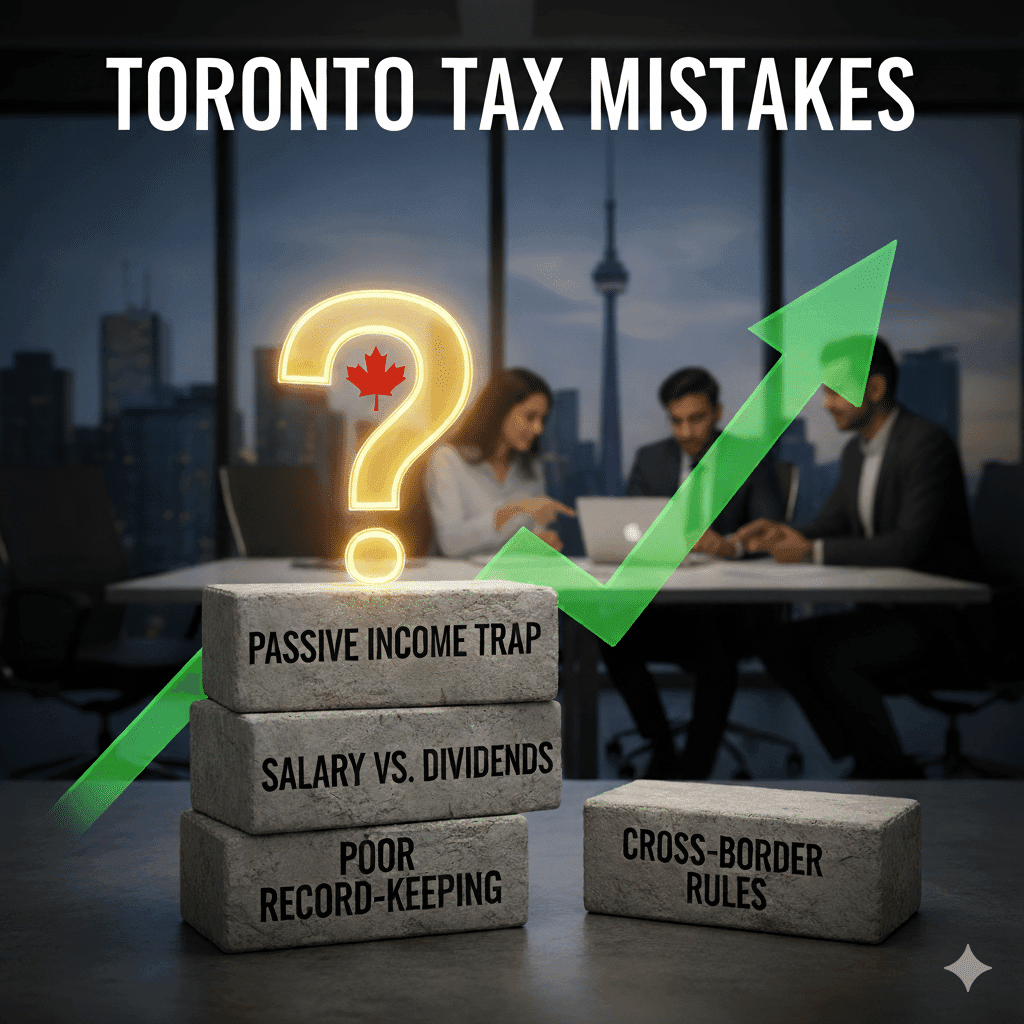
Corporate tax planning mistakes businesses must avoid in 2025-2026 often include missed corporate tax deadlines, poor record-keeping, and incorrect business expense classification. Gondaliya CPA experts help growing Toronto and Mississauga companies stay compliant with CRA rules, optimize tax credits like SR&ED, and manage payroll obligations to prevent costly penalties.
Common Corporate Tax Planning Mistakes Toronto Businesses Make in 2025-2026
Neglecting Year-Round Tax Planning Leading to Missed Savings
Many Toronto businesses wait until the last minute to plan their taxes. This often causes missed savings and extra costs. Neglecting year-round tax planning means you lose chances to save money every year. It also makes it harder to minimize tax liabilities. If companies check their finances throughout the year, they catch more deductible expenses early. Filing tax returns on time becomes easier, too.
Here’s why year-round planning helps:
- Spot deductible expenses early, not at year-end
- Save money regularly instead of scrambling later
- Reduce stress when tax season arrives
So, don't put off tax planning. It pays off to keep track all year long.
Improper Classification of Business Expenses: Meals, Home Office, Vehicle Costs and Associated Penalties
Many businesses make mistakes in how they classify expenses. Errors with meals, home office, or vehicle costs can lead to penalties from CRA. These mistakes cause costly risks that could be avoided.
Common issues include:
- Meals and entertainment expenses: Only half of meal costs count if they're linked to business income
- Home office deduction rules: Workspace must be used just for work to qualify
- Vehicle expense claims: Need careful records showing business vs personal use
Incorrect classifications not only risk fines but also invite audits. Keeping proper records helps stay on the right side of corporate tax compliance in Toronto.
Overlooking Available Tax Credits and Incentives Including SR&ED, Investment, Hiring, and Training Credits
Toronto businesses sometimes miss out on tax credits that can save a lot of money. There are many business tax credits available that help reduce costs.
Here are key credits often overlooked:
- Scientific Research & Experimental Development (SR&ED): Helps businesses claim some R&D spending back
- Investment tax incentives: Offers rebates for qualifying capital investments
- Hiring and training tax credits: Rewards businesses that hire or train workers
Taking advantage of these credits can boost cash flow while staying compliant with CRA rules. Many miss these benefits simply because they don’t know about them or forget to claim them.
Avoiding these common corporate tax planning mistakes means watching your books all year, classifying expenses right, and using every credit possible. Working with professionals like Gondaliya CPA can help Toronto companies handle this well for 2025-2026 and keep penalties away while saving money.
Inefficient Corporate Structure and Reorganization Errors
Picking the right corporate tax structure in Toronto really matters if your business wants to save on taxes. Many companies make mistakes with their incorporation or how they set up shares. These errors cause inefficient tax situations that end up costing more money. Knowing how corporate incorporation tax impact works helps you avoid these issues. It also keeps your business aligned with CRA rules while managing your cash better.
When businesses reorganize, they face special tax effects. For example, forming a holding company without help can trigger unexpected taxes or lose you some credits. Also, setting up shares wrong changes how dividends and shareholder pay work. This can lead to bigger tax bills or missed chances.
- Bad share structuring can block good dividend options.
- Reorganizations without planning risk costly tax hits.
- Holding companies formed improperly might cause surprise taxes.
Risks of Poor Incorporation Decisions and Share Structuring Without Professional Advice
If you skip consulting a tax accountant, your Toronto business might run into trouble. Here’s why:
- Incorporation Tax Advice: Without advice, your timing or place of incorporation could cause extra provincial surtaxes or loss of small business deductions.
- Shareholder Compensation Issues: Wrongly set-up pay plans for shareholders often catch CRA’s attention and could lead to penalties.
- Stakeholder Share Structuring: Sharing out shares incorrectly can cause fights over control or mess up who gets what later.
Getting professional advice helps you follow new rules for 2025–2026 and sets up your company to benefit shareholders best. Experts save you from fixing expensive errors later.
- Talk to a pro before choosing incorporation details.
- Plan shareholder payments carefully with an expert.
- Structure shares clearly to avoid conflicts.
Impact of Corporate Structure on Tax Efficiency for Growing Toronto Businesses
Your corporate structure impacts how much tax you pay every year. Smart restructuring combined with tax optimization consulting helps businesses:
- Maximize deductions and credits
- Lower their overall corporate taxes
- Manage cash flow better using good dividend policies
- Use benefits from holding company formation like protecting assets
For example, a Toronto tech startup saved $50K each year after Gondaliya CPA fixed their share classes and used investment credits under new rules.
Growing businesses should check their setup regularly as CRA rules change. This prevents mistakes like wrong classifications or missed incentives that cause audits.
Common Corporate Reorganization MistakesPotential ConsequencesRecommended RemediesForming holding companies without adviceSurprise capital gains taxesConsult experts earlyPoor share class designLess flexibility in profit sharingDesign shares around stakeholder needsIgnoring provincial incorporation rulesHigher provincial surtaxesPick the right location carefullyMissing updated CRA regulationsPenalties for non-complianceStay updated through advisors
Good corporate structures matter for lasting growth in Ontario’s tough market. Using services like those from Gondaliya CPA helps keep your business legal and saves money by planning smartly for Toronto firms facing local tax challenges this year.
Payroll Compliance Challenges That Cause CRA Penalties
Payroll compliance plays a big role in corporate tax compliance Toronto businesses face every day. Mistakes with payroll taxes often lead to CRA penalties Ontario companies really want to avoid. Mississauga payroll compliance rules aren’t easy either, and slipping up means more audit risks and tougher CRA enforcement Toronto offices don’t mess around with. The usual errors are misclassifying employees, late payroll tax payments, and underestimating CPP and EI deductions. Knowing these problems helps companies keep their payroll on track and dodge penalties as rules change for 2025–2026.
Misclassifying Employees and Consequences
Canada has strict employee classification rules. When businesses misclassify employees, trouble follows fast. Treating workers as contractors when they are employees or vice versa affects employment insurance (EI) contributions and Canada Pension Plan (CPP) deductions. Employers must get this right.
Here’s why it matters:
- Wrong classification means missing EI and CPP payments.
- CRA can go back years to collect unpaid taxes plus interest.
- Intentional mistakes may trigger hefty penalties per worker.
Toronto employers should look closely at control over work hours, tools given to the worker, financial risk they take, and how much they fit into the company. Getting employee status wrong can start audits or CRA enforcement actions all over Ontario.
Untimely Payroll Tax Remittance and Underestimating CPP/EI Deductions
Missing payroll tax remittance deadlines causes immediate fines from CRA enforcement Toronto teams. These payments include income tax withheld plus employer parts of CPP and EI.
Common mistakes include:
- Forgetting monthly or quarterly payroll tax deadlines.
- Guessing too low on CPP/EI amounts due or missing changes in 2025–2026 rates.
Penalties pile up quickly after missed deadlines:
- One day late? A 3% penalty starts.
- Three months late? It climbs to 10%.
Underreporting deductions means extra bills plus interest, hurting cash flow for many Toronto companies.
Strategies to Maintain Payroll Compliance for Toronto Companies
Staying clear of payroll pitfalls takes focus on accuracy and timing:
- Set clear employee classification rules; check job roles against government criteria before paying.
- Use software that sends reminders about Ontario payroll remittance deadlines every month or quarter.
- Do regular checks on your CPP/EI calculations with the latest CRA rates.
- Keep neat records on wages, benefits, and classifications so audits go smoothly.
- Ask tax pros familiar with Toronto laws when things get tricky to avoid mistakes in managing payroll taxes.
Fixing issues during the year beats scrambling at filing time. This lowers CRA audit risks and stops penalties from piling up in Ontario.
Common Payroll Compliance MistakesImpactRecommended RemedyMisclassifying employeesBack taxes + penalties; audit triggersReview contracts & job duties regularlyLate/remitted payroll taxesFines escalating up to 10%; interestAutomate reminders; prioritize timely filingsUnderestimated CPP/EI deductionsReassessments; unexpected liabilitiesUpdate deduction tables yearlyPoor record keepingDifficulty defending positions during auditsImplement organized digital records
Managing payroll well eases stress about audits and keeps your reputation solid with clients and regulators alike.
*Gondaliya CPA offers corporate tax planning help tailored for Toronto-area firms needing guidance on common mistakes in payroll compliance.*
Income Reporting Errors and Record-Keeping Issues
Getting your income reporting right and keeping good records matters a lot for corporate tax compliance in Toronto. Lots of businesses mess up with income misreporting, which can lead to expensive CRA audits or fines. Typical corporate tax errors include underreporting revenue, overstating expenses, or just not having enough paperwork to back up numbers. These mistakes raise the chance of audits and stop you from claiming deductions you actually deserve.
Toronto companies need to keep their financial records organized and maintain accurate bookkeeping all year long. Good documentation helps when the CRA does a financial record audit. It shows that you follow Ontario’s tax rules for 2025-2026. Without proper records, it’s easy to misclassify transactions, which can cause disagreements with the CRA or miss out on saving money.
Here are some common problems:
- Underreported income raising penalties
- Overstated expenses causing disallowed claims
- Poor documentation triggering audits
- Late payroll remittances leading to penalties
- Incorrect GST/HST filings resulting in fines
Fix these by keeping regular reconciliations, using good bookkeeping services, organizing digital files, automating payroll, and watching your GST/HST thresholds.
Underreporting, Overreporting, and Their Effects on Small to Medium Toronto Businesses
Income misreporting is a big mistake small businesses make in Toronto. Underreporting income might seem like an easy fix to lower taxes but it risks heavy fines if caught by the CRA. On the flip side, overreporting income or inflating sales messes up your financial statements and makes cash flow confusing.
Both under and overreporting hurt your reputation with tax officials. It also makes getting loans or investors harder because your numbers look unreliable. For example, a Mississauga SME got fined badly after the CRA found inconsistent sales numbers during an audit. That shows how small errors can grow into big trouble.
Corporate income reporting needs care. Every transaction should be recorded at its real value using Canadian accounting rules. Doing this lowers audit chances and helps you make smarter business choices.
Watch out for:
- Understated revenue trying to hide earnings
- Inflated income making profits look bigger than real
- Errors messing up cash flow forecasts
Importance of Accurate and Organized Records for Compliance and Maximizing Deductions
Keeping accurate records is not just about following rules but also about saving money on taxes. Organized documents let you sort expenses clearly — things like meals, home office costs, vehicle use, research credits (SR&ED), investment incentives, payroll taxes (CPP/EI), GST/HST filings, and more.
When expenses are sorted properly and backed by receipts or contracts, businesses can claim all allowed deductions without fear of losing them during audits. It also helps you meet Ontario’s deadlines as well as federal CRA rules.
To save more on taxes:
- Store digital invoices inside your bookkeeping software
- Separate personal from business expenses clearly
- Track payroll payments closely
- Update your ledgers often instead of waiting till year-end
These steps cut down mistakes from late filing or incomplete info — a common problem among Toronto businesses facing new rules through 2026.
Focusing on clear income reporting and solid record keeping puts businesses in a better spot with the CRA while making sure they get all available tax benefits that apply to Toronto companies.
Common Corporate Tax ErrorsImpactRecommended RemedyUnderreported RevenuePenalties up to 50% plus interestImplement regular reconciliationsOverstated ExpensesDisallowed claims leading to reassessmentsUse professional bookkeeping servicesPoor DocumentationAudit triggers & lost deduction claimsMaintain organized digital filing systemsLate Payroll RemittanceCPP/EI penaltiesAutomate payroll processesIncorrect GST/HST FilingFines & rebate denialsMonitor thresholds closely
Gondaliya CPA offers corporate tax planning tailored for Toronto's market — helping clients avoid mistakes by staying aligned with current law changes.
Call To Action:Avoid costly income reporting errors this year by booking a meeting with Gondaliya CPA — trusted for corporate tax planning in Toronto and Mississauga.
FAQ
What are common income reporting mistakes made by Toronto businesses?
They often underreport revenue or overstate expenses without proof. Poor bookkeeping causes inaccurate filings that lead to CRA audits.
How does poor record keeping affect my corporate taxes?
If documents aren’t organized well, it’s hard to claim valid deductions. Also increases audit risk since there’s no proof for reported numbers.
When should I consult a corporate tax accountant in Toronto?
Talk to corporate tax accountant early when setting up your accounts or before yearly filing — especially because rules are changing through 2026.
GST/HST Filing Mistakes and Threshold Confusion
Getting your GST/HST filing right matters a lot for corporate tax compliance in Toronto. Many businesses get tripped up by unclear rules about when to register, when to file, and how to claim rebates. These mistakes can bring CRA penalties in Ontario, like late tax filing penalties that hurt your cash flow big time.
Common Errors Leading to Fines, Mispricing, or Missed Rebates in Toronto and Mississauga
A big error is not registering for GST/HST once your taxable sales go over $30,000 in a quarter or four quarters combined. When you miss this, CRA steps in with enforcement actions that include fines—sometimes 5% of what you didn’t report plus daily interest.
Another mistake happens when businesses mark some sales as exempt instead of taxable. This leads to mispricing and cuts down on input tax credits. For example, some Mississauga companies skip charging HST on services that should be taxed. That means they miss out on rebates for expenses they could have claimed.
Late or wrong filings are also common. If you miss deadlines for quarterly or annual returns, CRA hits you with late-filing penalties starting at $100 a day. These can stack up for up to a year’s worth of returns. Plus, filing errors can trigger audits where CRA reassesses taxes owed and adds interest.
These errors don’t just cost money—they also shake your reputation with suppliers and clients who need correct invoices for their taxes.
Best Practices for GST/HST Registration and Filing Compliance
To dodge these issues:
- Watch your revenue closely against the $30,000 threshold for Toronto businesses.
- Register with the CRA right after you pass the limit; waiting only risks fines.
- Keep neat records showing taxable sales separately from exempt supplies.
- File your returns on time—monthly, quarterly, or yearly—to avoid penalties.
- Claim HST rebates properly by keeping invoices that prove your input tax credits.
- Follow a solid corporate tax compliance checklist with all key due dates.
Working with knowledgeable experts helps you follow changing rules for 2025–2026. They can guide you through rebate claims and keep you clear of penalty assessments under Ontario’s strict CRA rules.
By sticking to solid processes around GST/HST registration and filing, Toronto and Mississauga businesses can avoid fines while making sure they get every rebate allowed by the CRA.
Managing Deadlines and Avoiding Costly Filing Errors in Ontario
Filing your taxes on time is super important if you run a business in Toronto or Mississauga. The Canada Revenue Agency (CRA) hits late filers with penalty assessments that can cost big money. Missing the tax filing deadlines Ontario means facing corporate tax penalty fines and interest charges. So, managing deadlines well helps you avoid these costs and stay on the CRA’s good side.
The CRA sets strict rules: file your corporate income tax within six months after your fiscal year ends. Payroll taxes must be paid monthly or quarterly, depending on your business size. If you miss these deadlines, penalties start at 5% of what you owe and grow every month you delay. Good planning can keep you safe from these fees.
Examples of CRA Enforcement Actions and Penalties for Late or Incorrect Filings
CRA enforcement Toronto has stepped up checks on companies that make mistakes in their filings. Here are some common penalties:
- Late filing penalties: 5% of unpaid taxes plus 1% each month for up to a year.
- Repeat fines: You pay more if you file late again within three years.
- Payroll tax penalties: Wrong employee classification or late CPP/EI payments lead to big fines.
- Interest charges: These add up daily until you pay everything.
For example, a business in Ontario that delayed payroll remittance got hit with over $10,000 in penalties and interest. Even small slip-ups can cost a lot thanks to these CRA rules that apply through 2026.
How Gondaliya CPA’s Corporate Tax Planning, Preparation, Filing, and Accounting Services Help Prevent Errors
Gondaliya CPA offers help that fits Toronto’s tax rules perfectly. Their services include:
- Preparing taxes right according to all federal and provincial laws.
- Filing returns on time without missing any deadlines.
- Checking reports carefully to avoid mistakes in income or expenses.
- Giving smart advice about payroll classifications and payment schedules.
Talking to a good accounting firm Toronto helps keep your records neat. This cuts down the chance of CRA enforcement actions by staying organized all year long.
Real-World Success Stories: Toronto Tech Company Saving $50K Annually; Mississauga Business Avoiding CRA Penalties Through Payroll Compliance
A tech company in downtown Toronto fixed bad tax planning errors by sorting expenses properly and using credits like SR&ED incentives. They changed their corporate setup too. This saved them over $50,000 every year—money they could use for growing the business instead of paying extra taxes. https://gondaliyacpa.ca/toronto-corporate-tax-planning-mistakes-to-avoid-for-growing-businesses/


Comments
Post a Comment