Year-Round Corporate Tax Planning: Keeping Ontario Businesses Tax-Ready
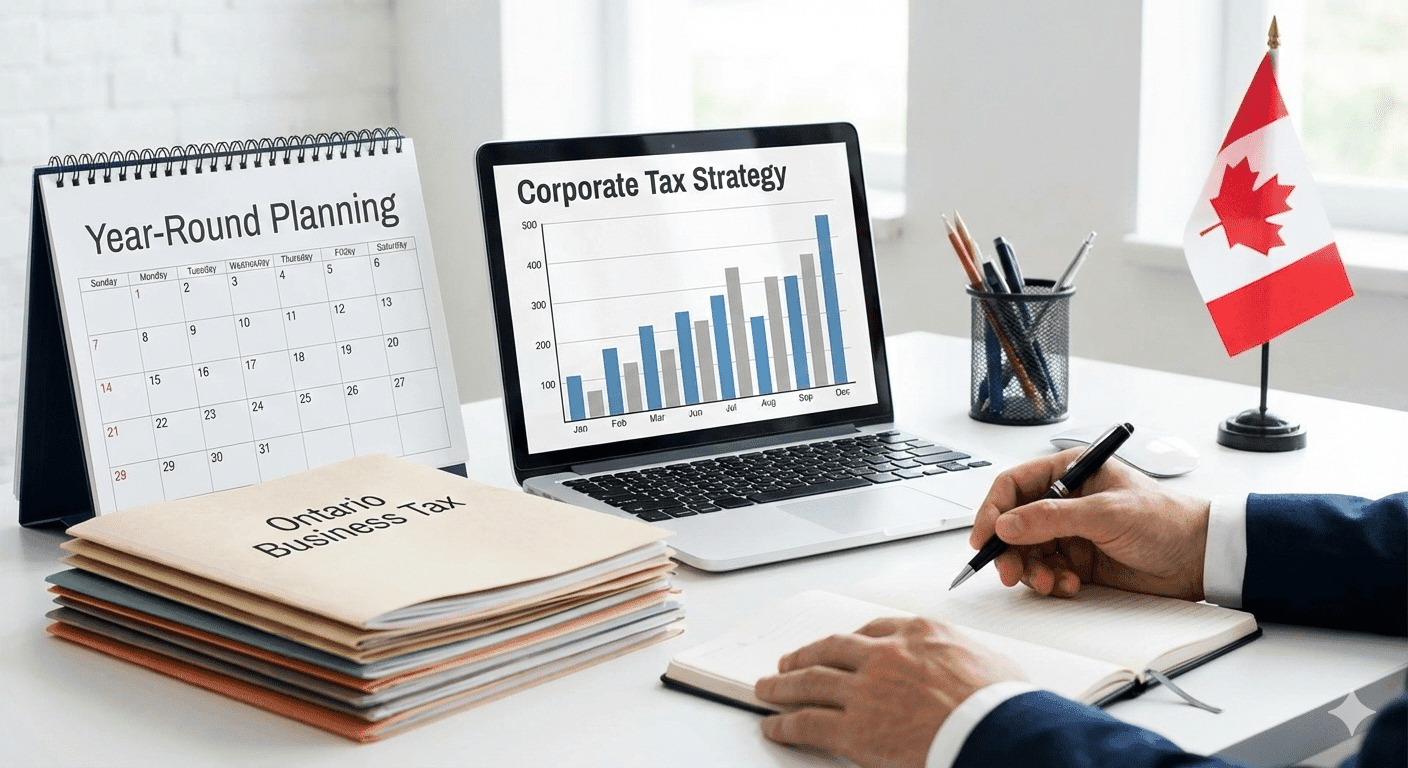
Year-round corporate tax planning is key to avoiding unexpected tax bills and staying compliant. Gondaliya CPA’s corporate tax accountants in Ottawa provide ongoing business tax planning, tax plan creation, and year-end tax planning tips to help companies file accurately and maximize savings.
Why Year-Round Corporate Tax Planning Matters for Ontario Businesses
Running a business in Ontario means dealing with Canadian corporate tax rules. If you plan your taxes year-round, you handle these rules better. A proactive strategy can lower tax bills, boost profits, and help avoid fines. It keeps your company on track and ready for changes.
Benefits of Ongoing Tax Planning Compared to Year-End Efforts
Doing tax planning all year has big perks over just waiting till year-end:
- Tax saving strategies: You spot ways to save taxes early on.
- Deduction maximization: Checking often means you catch every deduction.
- Penalty avoidance: Knowing rules as they change keeps you from penalties.
- Timely information: You get current data to make smart choices.
Switching from last-minute work to steady planning helps your money situation a lot.
Impact on Cashflow Stability and Deduction Maximization
Cash flow keeps your business alive. Good tax planning spreads money right over the year. Here’s how it helps:
- Business Expense Optimization: Watching costs closely shows where to save or spend less.
- Maximize Deductions: Tracking stuff all year means you don’t miss deductions at the end.
This way, you keep cash steady and use every chance to cut your taxes.
How Continuous Tax Planning Supports Business Growth
Working with CPA firms like Gondaliya CPA regularly helps your business grow by using plans that fit your needs:
- Strategic Financial Planning: You check your finances often and adjust plans based on results and the market.
- Tailored Tax Strategies: Custom plans match what your business wants while keeping taxes low.
So, having a solid corporate tax strategy all year is key for Ontario companies who want steady growth and to follow the rules in 2025–2026. Experts help you face challenges while grabbing chances within the law.
Developing a Month-to-Month Tax Readiness Plan for Ontario Corporations
Corporate tax planning in Ontario needs your attention all year long. A month-to-month tax readiness plan keeps your business on track. It helps you stay compliant, find all possible deductions, and dodge last-minute stress. This kind of planning fits right into your strategic financial planning by mixing ongoing financial education and steady contact with your advisors.
When you create tax strategies that match your business cycle, you can keep cash flow steady and cut down audit chances. Following corporate tax compliance all year means you meet CRA rules on time and get the most benefits available.
Integrating Bookkeeping Reviews into Monthly Routines
You need to check your bookkeeping often to keep records right and plan taxes well. Adding bookkeeping reviews every month helps you spot mistakes fast and keep numbers fresh.
Automated bookkeeping tools plus cloud accounting let you track expenses in real time. Digital tax tools link straight to bank or credit card accounts, so less typing is needed.
Here’s why monthly bookkeeping reviews help:
- Catch deductible expenses early
- Make financial statements more accurate
- Prepare faster for quarterly reports
- See cash flow trends clearly
Doing bookkeeping regularly also lets you talk with your CPA using current info—not old data.
Managing Installment Payments Throughout the Fiscal Year
If you run an Ontario corporation, watch those corporate tax installment payments closely. The CRA asks for quarterly installments if you owe more than $3,000 yearly.
Key tips for handling installment payments:
- Base estimates on last year’s income
- Know due dates: usually March 15, June 15, Sept 15, Dec 15
- Change payments if your income changes a lot
Tracking installment payments helps avoid late fees or surprise bills. Your CPA can help update these based on how your earnings look now.
Tracking Expenses and Deductions as They Occur
To get the most deductions, keep a close eye on expenses all year. Write down business costs right away so nothing gets missed later.
Try these ideas for expense tracking:
- Sort expenses clearly following CRA rules
- Use apps or digital receipts to save proof fast
- Check regular bills often to spot savings chances
Watching expenses like this boosts deduction maximization and keeps business costs in check without waiting for year-end.
Table 1: Sample Month-to-Month Tax Readiness Checklist
MonthKey ActionsDocumentation NeededJanuaryReview previous year's final returnLast filed T2 returnFebruaryConduct monthly bookkeeping reviewBank statements; invoicesMarchPrepare first quarter installmentIncome estimates; payment receiptAprilUpdate payroll recordsPayroll summariesMayAnalyze deductible expensesReceipts; contractsJuneSubmit second quarter installmentUpdated income forecastJulyMid-year financial health checkFinancial reportsAugustReconcile vendor paymentsVendor invoicesSeptemberThird quarter installment paymentIncome updates; payment confirmationOctoberReview capital asset purchasesCapital asset documentationNovemberPrepare preliminary annual budget planBudget draftsDecemberFinalize fourth quarter installment paymentPayment receipts
This list keeps Ontario corporations organized all year while helping them stay compliant.
FAQs
What are key tax deadlines for Ontario corporations?
Major ones include quarterly installments (March 15, June 15, Sept 15, Dec 15), T2 Corporate Income Tax Return due six months after fiscal year-end, plus GST/HST remittances depending on CRA rules.
How often should I review my corporate tax plan?
Monthly reviews work best to track income or expense changes that affect taxes. Meet with your CPA every three months to adjust plans as your business shifts and avoid surprises.
How does ongoing tax planning reduce penalties?
Keeping an eye on filings and payments stops late fees or interest from CRA. Being proactive spots problems early so you fix them before they get worse.
Working with a month-to-month plan improves corporate tax planning across Ontario. It also helps businesses stay strong against changing rules. Regular teamwork between companies and their CPAs leads to smart choices that protect profits while following tax laws fully.
Key CRA Deadlines and Compliance Requirements for Ontario Businesses
Managing your corporate taxes all year means you gotta know the deadlines set by the Canada Revenue Agency (CRA). If you run a business in Ontario, you deal with rules from both the federal and provincial sides. Missing these can lead to penalties or cash flow problems. Staying on top of these dates helps you handle your tax stuff smoothly in 2025-2026.
Overview of Federal and Provincial Filing Dates
Ontario businesses have specific dates to file their corporate income taxes with the CRA. Usually, the T2 return is due six months after your fiscal year ends. But if you owe money, you must pay it within two months after that date to avoid interest charges.
Here’s a quick list:
- File Corporate Tax Return: Within six months after fiscal year ends.
- Pay Taxes Owed: Within two months after fiscal year ends (or three months if you qualify for small business deduction).
- Installments: Pay quarterly based on what you think you’ll owe.
Provincial deadlines mostly match federal ones but might include extra reports under Ontario’s Business Corporations Act or other laws.
Filing TypeDue DateCorporate Income Tax ReturnWithin 6 months of fiscal year-endBalance Due PaymentWithin 2 months post-fiscal year-end*Installment PaymentsQuarterly: March, June, September, December
* Small Canadian-controlled private corporations get up to three months to pay without penalty.
Hitting these deadlines keeps you in line with federal and provincial rules and cuts down the chance of late fees.
Consequences of Missing Installment and Filing Deadlines
If you miss CRA corporate tax deadlines, expect fines. The penalty starts at 5% of what you owe. Then it goes up 1% every month after that — up to 12%. Repeat late filings make penalties worse.
Not paying installments on time also costs you interest that builds up daily until paid. These fees can pile up fast.
Penalties hit your cash flow hard because they add surprise expenses. Plus, CRA might check your records more often if they spot late filings.
To avoid fines:
- File tax returns before due dates.
- Pay your quarterly installments on time.
- Keep good records for all claims.
Working with an accountant helps catch mistakes early so you don’t miss deadlines or pay wrong amounts. This way, you plan better through the year instead of rushing at the last minute.
Staying Updated on Regulatory Changes Affecting Ontario Corporations
Tax laws change regularly in Canada. New rules affect tax rates, credits, deductions, and reporting rules at both federal and provincial levels. For example:
- Changes to scientific research tax credits
- Updates in capital cost allowance rules
- Adjustments to small business deductions
Keeping up with these changes saves money and avoids errors caused by old info. It also makes sure you follow CRA’s latest rules.
To stay informed, check:
- Canada Revenue Agency website
- Finance Canada announcements
- Ontario Ministry of Finance news
Teaming up with a CPA firm like Gondaliya CPA can help since they track changes closely. They explain new rules so your business stays legal while getting all possible savings during each accounting period.
FAQs
What are key tax deadlines for Ontario corporations?
You must file T2 returns within six months after your fiscal year ends. If you owe taxes, pay within two months (or three if eligible). Quarterly installments happen every three months too.
How often should I review my corporate tax plan?
Check your plan every month along with bookkeeping. Do bigger reviews every quarter when installment payments come up—this helps fix issues before filing time.
How does ongoing tax planning reduce penalties?
Planning throughout the year avoids last-minute rushes that cause missed payments or late filings. It helps predict what you'll owe so payments go out on time and penalties stay low.
For help keeping track of these important deadlines and staying compliant, contact Gondaliya CPA — experienced in Ontario corporate tax planning and compliance.
How Ongoing Collaboration with CPA Firms Like Gondaliya CPA Enhances Compliance
Year-round corporate tax planning in Ontario means more than just filing taxes once a year. Working with a corporate tax accountant Ontario businesses trust helps you stay ahead of changes. They give expert insight and manage your tax duties before problems pop up. Your CPA firm will keep communication clear and make a plan just for your company’s goals.
Here’s what you get when you work closely with them:
- Trusted representation during CRA talks to lower stress and risk
- Ongoing financial education so your team knows new rules
- Bilingual communication to fit Ontario’s diverse workplaces
- Personalized training so staff can keep good records
- Better audit readiness that helps minimize penalties
By staying involved all year, you make confident decisions and keep cash flow steady. You also catch chances to save money before the year ends.
Role of Corporate Tax Accountants in Proactive Tax Management
Corporate tax accountants help Ontario businesses plan taxes early, not last minute. When you involve a CPA early, they build tailored tax strategies as your business changes. This keeps you ready for new challenges or growth.
Proactive strategies they use include:
- Reviewing financials often to find risks or savings
- Predicting taxable income to plan installment payments right
- Advising on investments or business changes for best tax results
Getting CPAs involved early cuts surprises during audits. It also makes working together easier when urgent tax issues show up.
Reducing Audit Risks Through Continuous Engagement
One big plus of working with your corporate tax accountant all year is lowering audit risk. Regular reviews mean filings match CRA rules better. Problems get caught early so they don’t cause audits later.
Some key ways to stay audit ready:
PracticeBenefitMonthly bookkeeping checksKeeps records clean and clearPaying installments on timeAvoids late fees and penaltiesTracking expenses closelySupports legit deduction claims
Being consistent shows good faith in following rules—auditors notice that when picking files to check.
Advantages of Expert Guidance in Navigating Complex Tax Rules
Canadian corporation tax laws are tricky, with frequent updates at federal and provincial levels. Expert guidance from skilled pros breaks down the rules into simple steps you can follow.
Benefits of expert help:
- Knowing both federal laws and CRA compliance Ontario expects
- Getting current corporate tax consulting services after law changes
- Using business advisory services that link taxes to bigger financial goals
With experts by your side, companies avoid costly mistakes. They make smart choices under changing laws—giving peace of mind for 2025–2026 and beyond.
Year-Round Corporate Tax Planning Tools and Resources for Ontario Businesses
Planning your corporate taxes isn’t just a year-end task. Ontario businesses do better with a steady, ongoing plan. This keeps you on top of deadlines, helps you claim deductions, and keeps your cash flow steady all year long. Digital tools like cloud accounting and automated bookkeeping make this easier. They keep your records up-to-date and show your finances in real time.
A corporate tax planning calendar tracks important dates for both federal and provincial taxes. Use it along with monthly checklists for reviewing bookkeeping, tracking expenses, and making installment payments. This way, you avoid last-minute rushes or penalties from the CRA.
Tax compliance software helps automate reminders for filing dates and payments. This cuts down on audit risks and improves how you manage money.
Here are some key tools to keep in mind:
- Corporate tax planning calendar
- Tax compliance calendar Ontario
- Monthly tax checklist
- Fiscal year management
- Digital tax tools
- Cloud accounting tools
- Automated bookkeeping
- Tax compliance software
Table 1: Annual Tax Planning Calendar for Ontario Corporations
MonthKey Actions & DeadlinesNotesJanuaryReview last fiscal year's tax filingsGet documents ready for auditsFebruaryFile T4 slips; prepare instalment paymentsKeep payroll taxes updatedMarchSubmit GST/HST returnsCheck input tax credit eligibilityAprilFinalize Q1 bookkeeping reviewAdjust estimated taxes if neededJunePay second quarterly instalmentAvoid interest on underpaid taxesSeptemberMid-year financial reviewPlan changes based on profitsOctoberPrepare preliminary year-end reportsLook for possible deductionsDecember (Fiscal Year-End)File corporate income tax return (T2)Have all supporting docs ready
This schedule follows Canadian corporation tax laws. It helps you submit forms like T2 returns on time and meet both federal and Ontario rules.
Table 2: Monthly Tax Readiness Checklist Including Documentation and Actions
MonthDocumentation NeededKey ActionsJanuaryBank statements; prior year’s final reportsReview annual budgets; reconcile accountsFebruaryPayroll summaries; supplier invoicesCheck payroll remittances; update expense logsMarchSales receipts; GST/HST filingsSubmit GST/HST returns accuratelyAprilExpense receipts; bank reconciliationsConduct Q1 bookkeeping reviewMayVendor contractsTrack deductible expenses carefullyJuneInstalment payment noticesMake second quarter instalment payment on timeJulyFinancial statementsUpdate internal controls if neededAugustInventory recordsAssess asset buys or salesSeptemberProfit & loss statementsDo mid-year financial analysisOctoberPreliminary year-end trial balanceFind more write-offs or creditsNovemberEmployee benefit plansCheck benefits follow CRA rulesDecember (Year-End)All relevant invoices & receiptsFinish T2 prep & file before deadline
This checklist keeps your record keeping steady. That means fewer mistakes when filing taxes. Plus, it helps spot chances to reduce taxable income using legit deductions.
Working with a CPA firm like Gondaliya CPA can help. They guide you through Ontario’s rules and help manage payments, keep good records, and cut audit risks with smart compliance.
Using a clear monthly plan with digital tools keeps your business compliant. It also steadies cash flow—so no surprises at year-end—and makes sure you get all the deductions allowed.
FAQs
What are key tax deadlines for Ontario corporations?
Ontario businesses must file the T2 return within six months after their fiscal year ends. Quarterly instalments are due in March, June, September, and December. GST/HST filings happen on set months based on how often you report.
How often should I review my corporate tax plan?
Look over your tax plan every month during bookkeeping updates. Adjust estimates when actual numbers change. Do a full check mid-year to fine-tune things before year-end.
How does ongoing tax planning reduce penalties?
Keeping an eye on payments stops late fees from piling up. Checking documents regularly lowers errors that might trigger audits or fines from CRA.
If your Ontario business wants steady help managing corporate taxes all year, working with experienced pros brings peace of mind and real savings tied to local rules.
Addressing Common Questions About Corporate Tax Planning in Ontario
What Are the Key Tax Deadlines for Ontario Corporations?
Ontario businesses have to follow some important tax deadlines. The big one is the T2 corporate tax return. You must file it within six months after your fiscal year ends. So, if your year ends December 31, you have until June 30 next year.
Besides filing, companies must make installment payments during the year. These happen four times—usually in March, June, September, and December. Paying in chunks like this helps avoid a big tax bill at once.
These dates come from the Canada Revenue Agency (CRA). Meeting them keeps you clear of trouble with both federal and provincial rules. Missed deadlines mean penalties and interest that can hurt your business.
Here’s a quick look:
- File T2 return: within six months after year-end
- Installments due: March, June, September, December
- Follow CRA schedules to stay on track
How Often Should Businesses Review Their Tax Plans?
It’s smart to check your tax plan every month.
https://gondaliyacpa.ca/year-round-corporate-tax-planning-keeping-ontario-businesses-tax-ready/


Comments
Post a Comment